AI memory is just markdown files
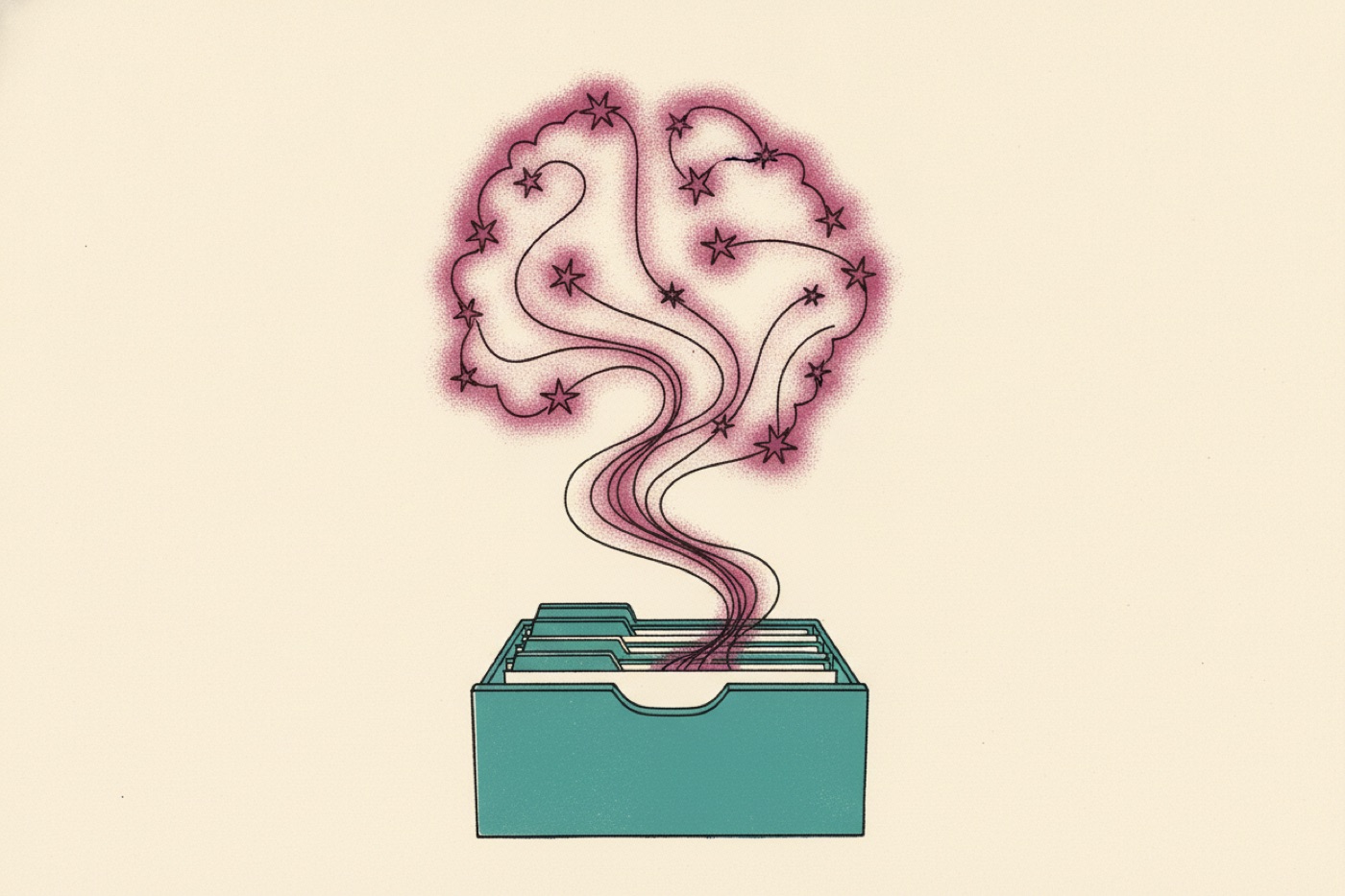
Everyone is talking about AI having memory: about agents that learn about you, remember you, and develop a personality. The way it gets described, it sounds like magic.
It's not magic. It's markdown files.
Markdown files are plain text. You can open them in Notepad. You can read them, and AI can read them.
At the start of every session, the AI reads a set of files about you. As something new comes up, it writes to those files. The next session, it reads them again and then makes updates as you work. Again and again and again…
The AI isn't deciding any of this on its own. It reads the instructions you set and follows them.
The phrase for this is context engineering. The prompt is the question you ask. The context is everything the AI can read while it answers.
Here's what that looked like for me recently:
I started working with a new client recently. The first month has been a diagnostic. I've had long calls with everyone on the team, producing hours of transcripts.
I set the up framework, defining how I wanted findings structured, what categories to focus on, and what was important for this organization.
After each call, I sat with Claude and worked through what came out. I made sure the points that mattered were captured in the notes saved to my client files.
What I didn't realise was that in the background, Claude was synthesizing all of this in real time and writing it to a single markdown file.
When I had finished all my interviews, I opened that file for the first time. It had produced more than 20 pages of synthesis, organised by the framework I'd set. Themes were summarized, points of divergence across the team were highlighted, and direct quotes backed up each point. It had even drafted suggested tasks for my 30- 60- and 90-day plan.
I didn't use this report as my final deliverable, but I used it as a starting point, and it was about 80% of the way there. The connections it drew were better than what I'd have produced on my own.
This happened over weeks, across many sessions. The AI didn't remember any of it. It loaded the file each time we worked on the diagnostic and added to it, because the instructions told it to.
It's not magic (even though it feels like it). It had context about the organisation. It had the framework I'd set. It had the transcripts.
I now have more than 100 files like this across my clients and my own work, for every client and initiative. Each updates on its own, because it has the right instructions and I give it enough context.
The files do need cleaning up, and sometimes Claude doesn't update them after every session. It's not perfect, but it's far better than trying to manage it all myself.
For me, understanding what sits under the "magic" has made a big difference. When I can see how the system remembers and builds on itself over time, I can review what it's doing and tailor it to get better results.
The less it feels like magic, the more I can guide it, and the better my work gets.
This is one piece of my AI operating system.
I write about building it, in public, in my newsletter AI on Purpose.
Subscribe to AI on PurposeLeading a team? Here's how I work with teams.