I was curious about AI second brains. Now I'm convinced.
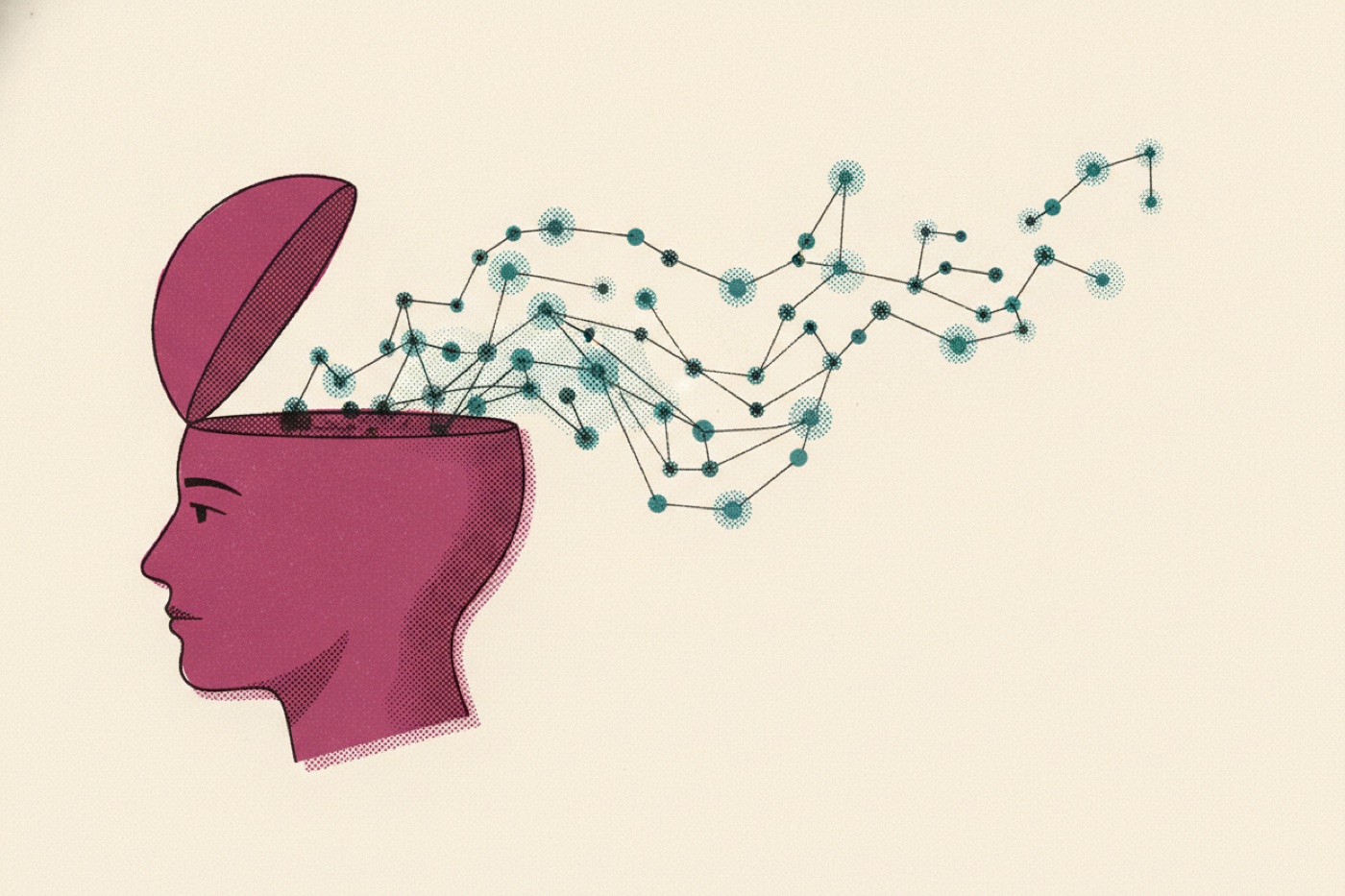
Everyone is talking about AI "second brains." I was curious, but not convinced. Now I am.
A problem I kept running into is that I have more data about my own work than my brain can hold: meeting transcripts, research articles, my own writing, podcasts I've listened to, multiple clients. AI chats help, but every conversation starts from scratch.
A few weeks ago, Andrej Karpathy, founding member of OpenAI and former AI lead at Tesla (and the person who coined "vibe coding"), posted about something he calls an LLM Wiki. The post got millions of views.
Instead of asking AI to search your files in each new chat, you build a knowledge base in Obsidian where every page links to related pages. AI looks across the links to surface connections you'd never think to search for.
I built it over the weekend, in the mornings before my kids were awake.
I set the initial prompt. Claude did the rest, using the connections from my AI assistant to locate my files, convert them to markdown, and organize them into a structured vault.
The system didn't just file things neatly. It auto-synthesized my material and wove a distributed web of links. Every wiki page summarizes my own perspective on the topic, with backlinks built in. Everything lives locally on my machine.
So far it has surfaced connections I never would have found on my own: an insight from an AI podcast solving a client's operations challenge; patterns running through two years of my writing I didn't notice. I used it to refine my strategic positioning by overlaying my material against thought leaders working in the same space.
I can also ask Claude questions directly, and it starts by searching my knowledge base, then supplements that with external research, and returns answers that actually reflect how I think. It's not magic. Some early connections weren't exactly right, but the quality has improved as I corrected it. And the outputs I'm now seeing are more sophisticated and thoughtful than anything I've gotten from AI before.
Yesterday, I canceled my paid CRM subscription. The system tracks my pipeline, runs a Kanban board, flags follow-ups, and briefs me before every meeting.
Every file I add is linked to everything else. The more I use it, the better it gets. This is becoming the backbone of how I work, and I'm already seeing where it could apply across the kinds of work I do with clients.
This was far easier than I expected.
This is one piece of my AI operating system.
I write about building it, in public, in my newsletter AI on Purpose.
Subscribe to AI on PurposeLeading a team? Here's how I work with teams.