AI slop isn't the whole story
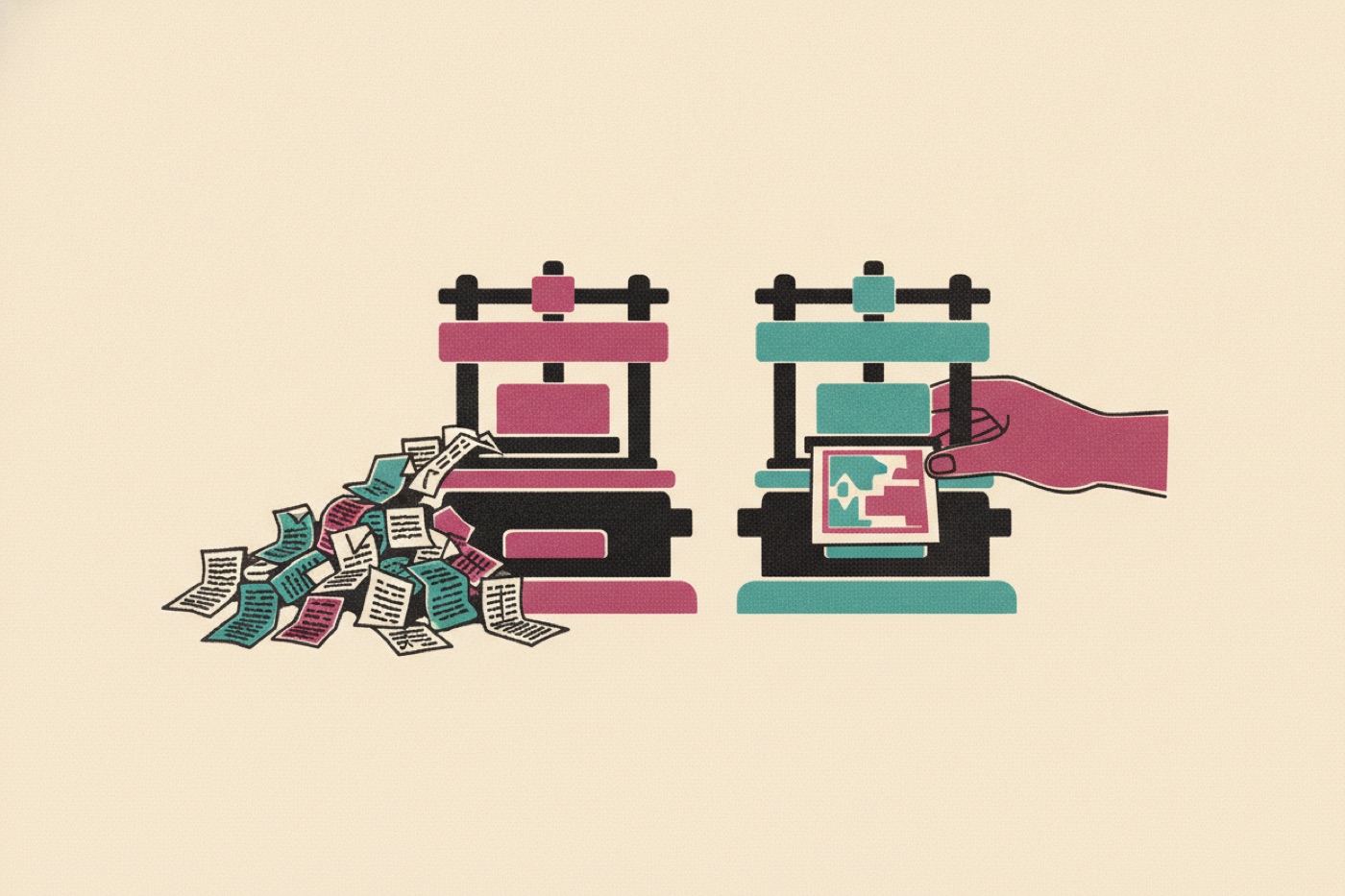
My LinkedIn feed is full of two things right now: 1) empty, clearly AI-generated content that has been so lovingly coined "AI slop", and 2) people complaining about how much they hate AI slop.
No one will disagree that hollow, soulless AI-generated outputs are frustrating and distracting.
But I'm less interested in how AI produces bad work. What I'm interested in is what it takes to get real value out of AI, and what the patterns are that other people can learn from.
I recently posted about a procurement system I'm building for one of my clients. It will run their whole process end to end: deciding what kind of purchase each request is, routing it based on value, drafting the contracts and work orders, giving contractors a portal to submit invoices, and keeping a clean audit trail at every step.
The output is something I'm very proud of. But it didn't come from giving Claude a short prompt and letting it run.
Before I built anything, I spent weeks understanding the full process: getting everything out of people's heads and into clear flowcharts in Figma, understanding what the policies require, mapping every decision and approval so that there was no ambiguity. Together with Claude, I designed the tech stack based on the functionality, price and integrations of each tool: Lovable for the frontend, Supabase for the underlying database, and n8n for the triggers.
I had both Codex and Claude review the plan independently, looking for where it might break, and I rewrote it based on the feedback to make it more robust. We mapped out versions, starting with a Minimum Viable Product with more complex functionality in later builds.
As Claude built the system via MCP connectors, I tested every integration, every handoff, and every piece of functionality as it came together. I had Claude set up a separate test environment alongside the live one so I could try things without messing up the live deployment. And I tested constantly, sharing feedback until each step worked, and ensuring every change was updated in the product requirements document.
This was not a small amount of work. The process was deliberate, structured, and required me to participate throughout the build. And this is the part (in my opinion) that made it succeed.
Many people I talk to are busy. They don't feel that they have time to learn how to use AI and instead want a switch they can flip so that an AI tool runs on its own and hands them finished work. At least in my experience, that's not how you can get good results. If you aren't clear on what you want and don't set up human checkpoints throughout, the result will likely be the AI slop that everyone is sick of.
AI has real potential. It has transformed how I work. But it works for me because I'm an active participant in every step of the process. I guide it, I interrogate it, and I correct it. It takes time, but the results have been far better than anything I could have produced on my own.
This is one piece of my AI operating system.
I write about building it, in public, in my newsletter AI on Purpose.
Subscribe to AI on PurposeLeading a team? Here's how I work with teams.