I'm not very good at business development. So I built myself a coach.
I am not very good at business development for my own business. It took me a while to admit that, because business development used to be part of my job. I was a CEO. I sold what our organization did for years, and I was good at it. Selling myself, it turns out, is a different thing entirely.
The organizations I talk to are usually ones I would love to work with, whose missions I believe in, and I like the people in them. That is where it goes wrong. I start bending my own rules, come in below the rates I set, and offer up timelines that do not actually work for me.
Then I saw it in writing. I asked Claude to pull the transcripts of my own discovery calls and review how I did. I opened with several minutes of monologue. I never asked whether the money for the work exists, which is the question that decides everything else. I quoted numbers I had never agreed with myself, and when people asked for a proposal, I deflected instead of sending one.
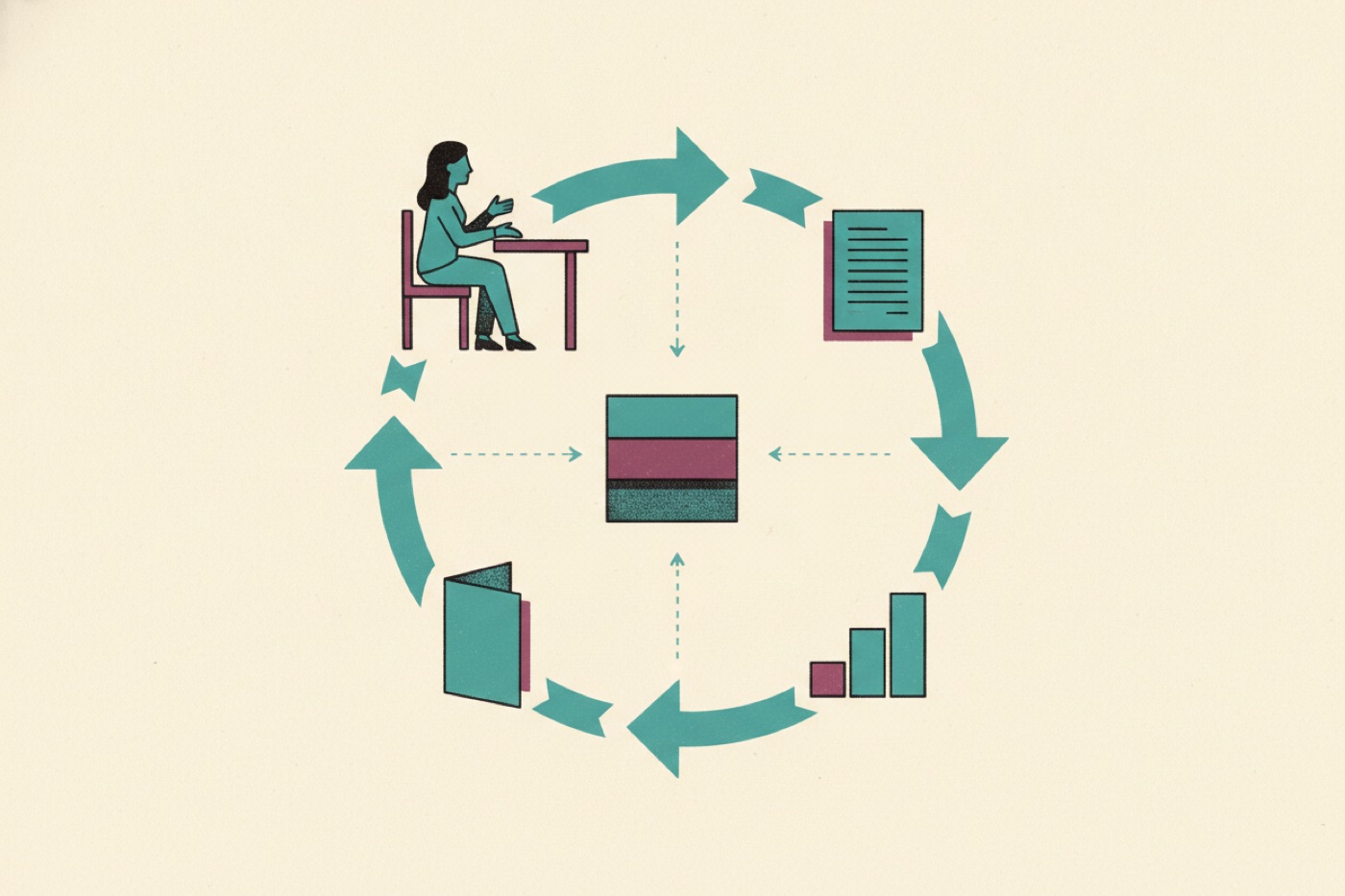
So I built myself a coach. It is the same grade-and-fix loop I wrote about last week, except this time I am one of the steps in it. After every call it grades the transcript against a rubric I wrote, nine dimensions, and every score has to point at the line that earned it. Before the next call it hands me a one-page card with the history, my open focus areas, and the lines I mean to say.
The mechanics are the easy part. What makes the coaching worth anything is the standard I set and the context I gave it: my positioning, my offers, the prices I have committed to. It knows my business because I sat down and wrote my business down. You could run my exact skill on your own calls and get completely different coaching, because what the loop is really working from is the context underneath it, and that part is yours.
Read the full post
This is the short version. The full post on Substack walks through the whole loop, lists all nine things every call now gets held to, and includes the skill file to copy with placeholders for your own criteria.
Read the full post on Substack →Leading a team? Here's how I work with teams.