The Sunday intelligence brief
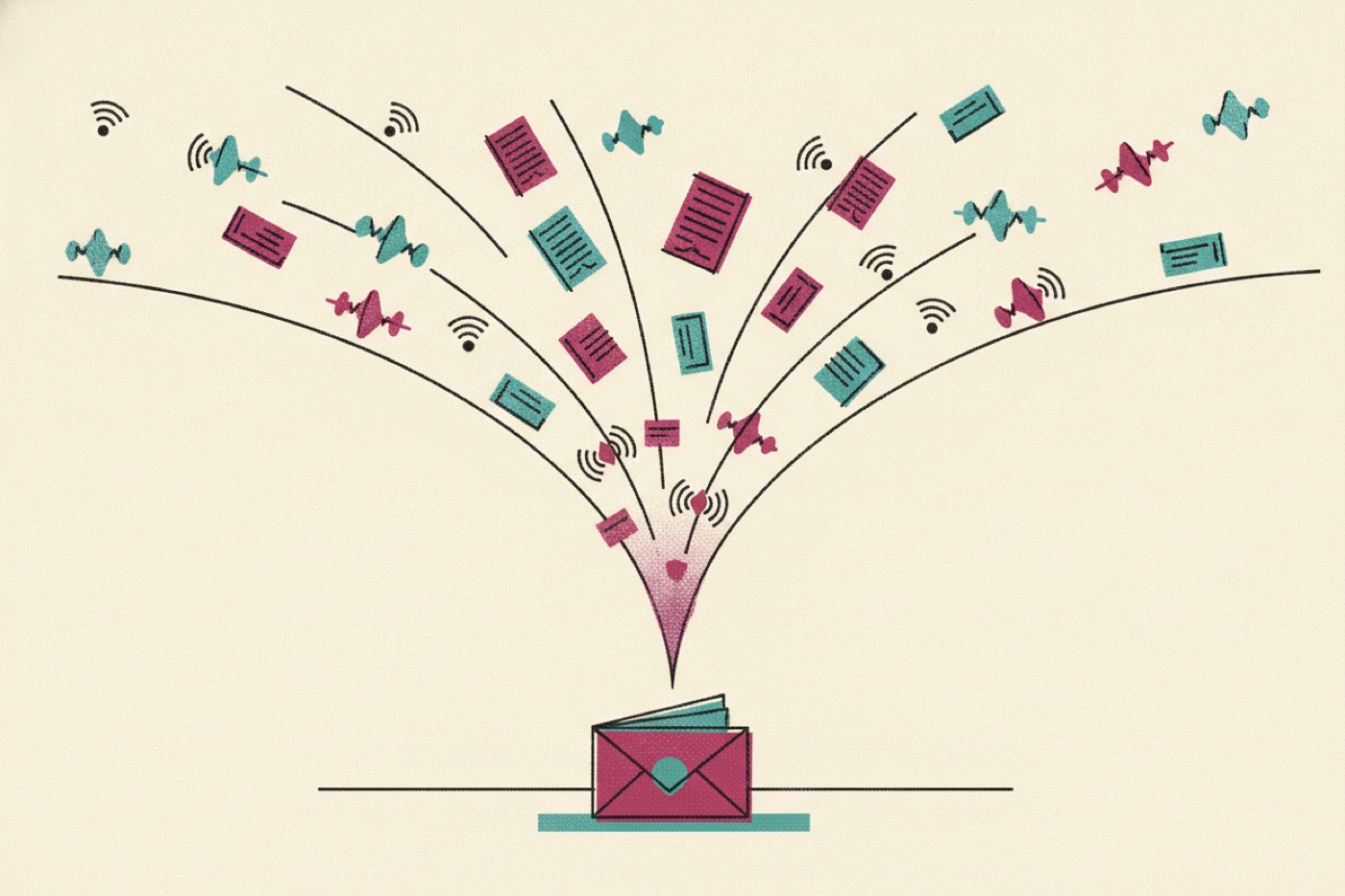
This week I built the AI business analyst I've been wanting for five years.
At D-Tree, we were doing world-class work in digital health. Digitally enabled community health systems were transforming healthcare, resulting in measurable improvements in maternal and child health.
But we weren't connecting our work to the broader conversations happening in the field the way that larger, better funded organizations were. And it cost us significant visibility and funding.
My executive coach identified this as a major organizational weakness. She recommended we start a trend-watching initiative: monitor publications, news, and opinion pieces across global digital health, and write about how our work fit into those conversations. Each person would find one relevant piece per month and contribute a thought leadership piece.
It worked for about a month. Then we were all too busy, pulled in too many directions. The initiative fizzled out.
What we actually needed was a business analyst: someone to scrape the web for relevant sources, link them to our strategy, and advise us on where we could add to the broader conversation. But we didn't have the budget. So we continued to do excellent work that almost no one outside our network knew about.
This challenge exists across so many organizations, including in my own consulting practice now.
I'm a business of one working at the intersection of organisational change, operations, and AI transformation. My ability to attract clients depends on staying relevant: contributing to broader conversations and demonstrating that what I offer solves real problems. That means tracking the latest trends and functionality in AI, staying up to date on organizational change frameworks, understanding what others in the space are saying, and linking it all to my expertise and offering.
But I have a full client load, ongoing professional development activities, and two small children at home. I don't have hours to scrape the web for sources, let alone analyse what I find and connect it to what I'm doing with clients.
So, this week, I built it.
Each Sunday, a system pulls from 14 podcasts, 20 newsletters, and academic journals, performs a deep analysis grounded in my strategic positioning and active client work, draws connections across sources, flags where new ideas reinforce or challenge my thinking, and spots patterns I wouldn't catch reading any one piece in isolation. I get an email linking to a Google doc with a summary of each piece: what was said, how it relates to my work, top sources to focus on, suggestions for new automations to build, and where ideas could add value to the clients I'm working with or speaking to.
This is what a business analyst would do. For the first time, I have something close to that.
Getting there was messier than I expected
Every Sunday by 8am, Claude reads my full strategic context and sends me an intelligence brief. But the build was not smooth.
I started with Routines, a recently released Claude feature that schedules Claude to run tasks automatically. You describe what you want done, set a time, and it runs.
My instructions had nine sequential steps, each requiring connections to dozens of external services: podcast platforms, newsletter sites, research databases. Any one of those connections can break. One broken step stopped the entire run and there was no easy way to identify what went wrong and fix it.
The system was trying to do too much in one command.
I spent nearly two days trying to make Routines work. Claude kept telling me it had fixed the problem, so I waited hours for the system to run, only to realize it had stalled after two minutes. I went through this frustrating process at least 5 times over a two day period. Eventually, I told Claude to stop trying incremental fixes and identify a completely different way to solve the problem.
This is when it suggested n8n to gather the information. n8n is built for this kind of work. Each step is simple and explicit. If something breaks, it logs exactly where and why. It handles all the gathering and saves a single, organized file to Google Drive by 6:30am.
For each podcast, it:
- Fetches the list of new episodes and checks for anything unprocessed
- Checks whether a transcript already exists
- If yes: downloads and cleans it up
- If not: downloads the audio, transcribes it with Whisper (an AI transcription tool), and merges the output
It runs a similar process for newsletters and peer-reviewed research. Everything is transcribed to one file.
At 8am, a Claude scheduled task starts and the information gathered by n8n is handed off to be analyzed.
Claude reads my full strategic context, held in the Obsidian wiki second brain I built. This includes my positioning, my content pillars and the work I'm focused on. It identifies connections between sources, flags where new content reinforces or challenges my positioning, and finds patterns across more material than I could realistically read in a week.
I was shocked by how detailed and on-point the output was. It is far better than I expected and is helping me to be more strategic and focused in my work.
Staying current used to take hours I didn't have and left me frustrated. Now I have a system running on its own every week, adding real value, and building the AI infrastructure I've been putting in place for my business. And struggling through the build process has given me skills and insight that I will bring to the next one.
Two days of failed attempts turned out to be the most useful part of the build.
This is one piece of my AI operating system.
I write about building it, in public, in my newsletter AI on Purpose.
Subscribe to AI on PurposeLeading a team? Here's how I work with teams.